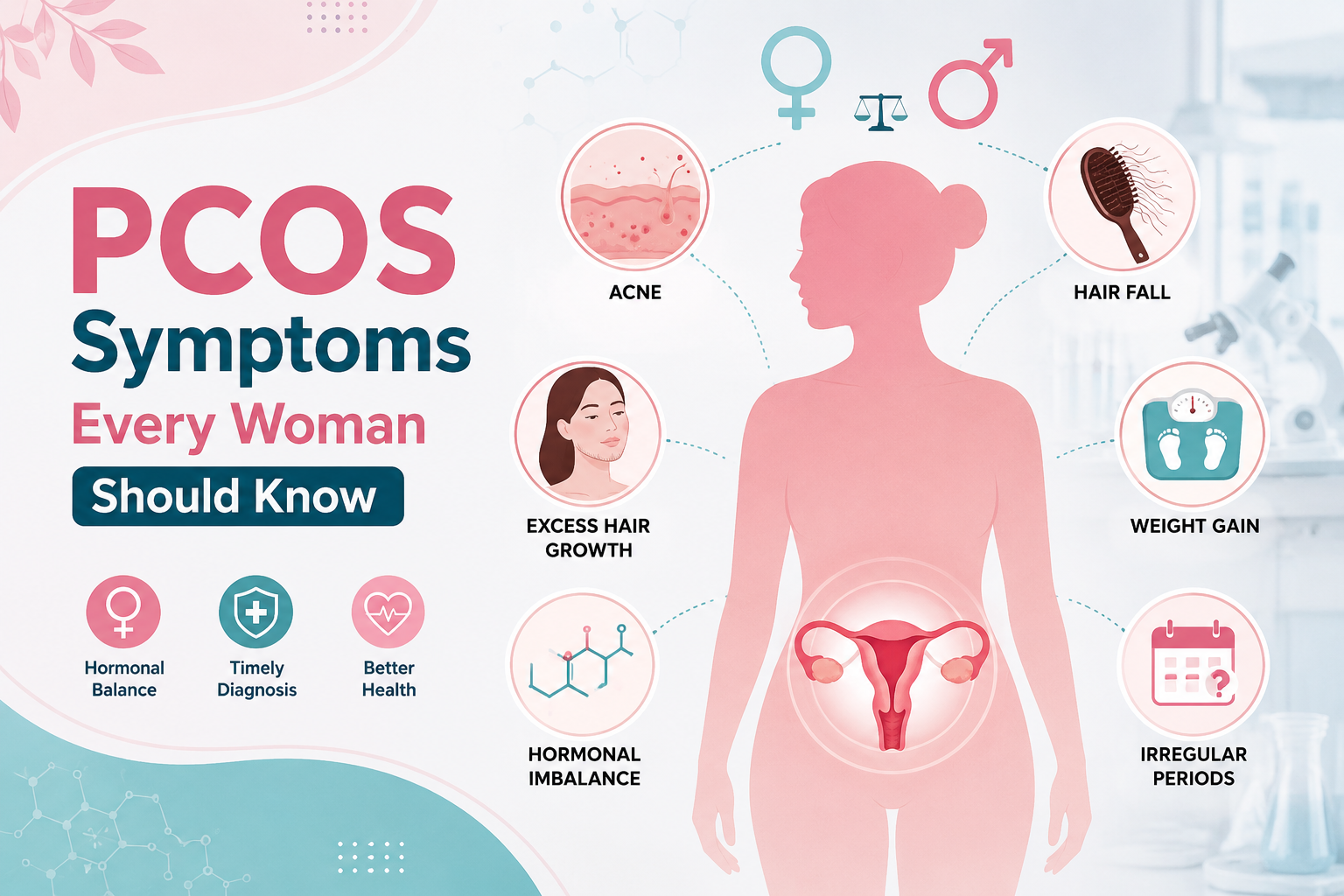
Polycystic Ovary Syndrome (PCOS) is one of the most common health conditions affecting women today. Despite its increasing prevalence, many women are still unaware of early PCOS symptoms and often ignore them as minor lifestyle issues. This condition is closely linked with hormonal imbalance in women, which can affect menstrual cycles, fertility, skin, and overall health.
Understanding these symptoms early can help in timely diagnosis and better management.
What is PCOS?
Polycystic Ovary Syndrome (PCOS) is a hormonal disorder that affects women during their reproductive years. It occurs when the ovaries produce higher-than-normal levels of male hormones known as androgens. This imbalance interferes with ovulation and leads to irregular menstrual cycles.
PCOS is not just a reproductive issue—it can also impact metabolism and long-term health if not addressed properly.
Common PCOS Symptoms You Should Not Ignore
Recognizing PCOS symptoms early can make a big difference in managing the condition. Some of the most common signs include:
Irregular periods
Women with PCOS often experience missed, delayed, or irregular menstrual cycles due to lack of regular ovulation.
Excess hair growth
Higher androgen levels may cause unwanted hair growth on the face, chest, abdomen, or back.
Acne and oily skin
Persistent acne, especially beyond teenage years, is a common sign of hormonal imbalance in women.
Weight gain
Many women with PCOS notice weight gain, particularly around the abdominal area, and may find it difficult to lose weight.
Hair thinning
Hair loss or thinning on the scalp, similar to male-pattern baldness, can also occur.
Difficulty conceiving
Irregular ovulation can make it challenging for women to become pregnant naturally.
Dark skin patches
Darkened areas of skin, especially around the neck and underarms, may indicate insulin resistance linked to PCOS.
Causes of Hormonal Imbalance in Women
The exact cause of PCOS is still not fully understood, but several factors contribute to hormonal imbalance in women:
- Insulin resistance, which increases androgen production
- Genetic factors, as PCOS often runs in families
- Chronic low-grade inflammation
- Unhealthy lifestyle habits such as poor diet and lack of exercise
How PCOS Affects Overall Health
PCOS can affect more than just reproductive health. If left unmanaged, it may lead to:
- Type 2 diabetes
- High cholesterol levels
- Heart-related issues
- Sleep disturbances
- Anxiety and depression
This is why early awareness and proper management are essential.
Diagnosis of PCOS
Diagnosing PCOS usually involves a combination of methods:
- Reviewing medical history and symptoms
- Blood tests to check hormone levels
- Ultrasound imaging to assess ovarian condition
If you notice consistent PCOS symptoms, consulting a healthcare professional is important for accurate diagnosis.
Treatment and Management Options
Although PCOS cannot be completely cured, it can be effectively managed with the right approach:
Lifestyle changes
Maintaining a healthy weight, eating a balanced diet, and regular exercise play a major role in symptom control.
Medications
Doctors may prescribe medicines to regulate menstrual cycles, manage acne, or support fertility.
Hormonal treatments
Hormonal therapies, such as oral contraceptives, can help balance hormone levels.
Fertility support
Women trying to conceive may benefit from treatments that stimulate ovulation.
Natural Ways to Manage Hormonal Imbalance
Managing hormonal imbalance in women can also be supported through daily habits:
- Follow a low glycemic index diet
- Reduce intake of sugar and processed foods
- Include fiber-rich and protein-rich foods
- Practice stress management techniques like yoga or meditation
- Maintain a consistent sleep schedule
Small changes can lead to long-term improvements in symptoms.
Internal Linking Opportunities
You can connect this blog with related services and topics such as gynecology care, fertility treatments, or lifestyle disorder management.
For example:
Learn more about managing PCOS symptoms through expert gynecology consultation.
Explore how hormonal imbalance in women impacts overall health and wellness.
Conclusion
PCOS is a common yet manageable condition. Being aware of PCOS symptoms and understanding hormonal imbalance in women can help in early detection and better treatment outcomes. With proper medical care and lifestyle adjustments, women can effectively manage PCOS and lead a healthy life.
If you notice any symptoms, it is always best to consult a healthcare expert and take proactive steps toward your well-being.
FAQs
What are the early signs of PCOS?
Irregular periods, acne, and excessive hair growth are among the earliest signs.
Can PCOS go away on its own?
PCOS does not go away completely, but symptoms can be managed effectively with treatment and lifestyle changes.
Is PCOS linked to weight gain?
Yes, many women with PCOS experience weight gain due to hormonal imbalance and insulin resistance.
Can women with PCOS get pregnant?
Yes, with proper treatment and medical support, many women with PCOS can conceive successfully.
How is hormonal imbalance in women treated?
Treatment depends on the cause but may include lifestyle changes, medications, and hormonal therapy.